Kovar vs Nickel Iron Alloys: Key Differences, Properties & Applications
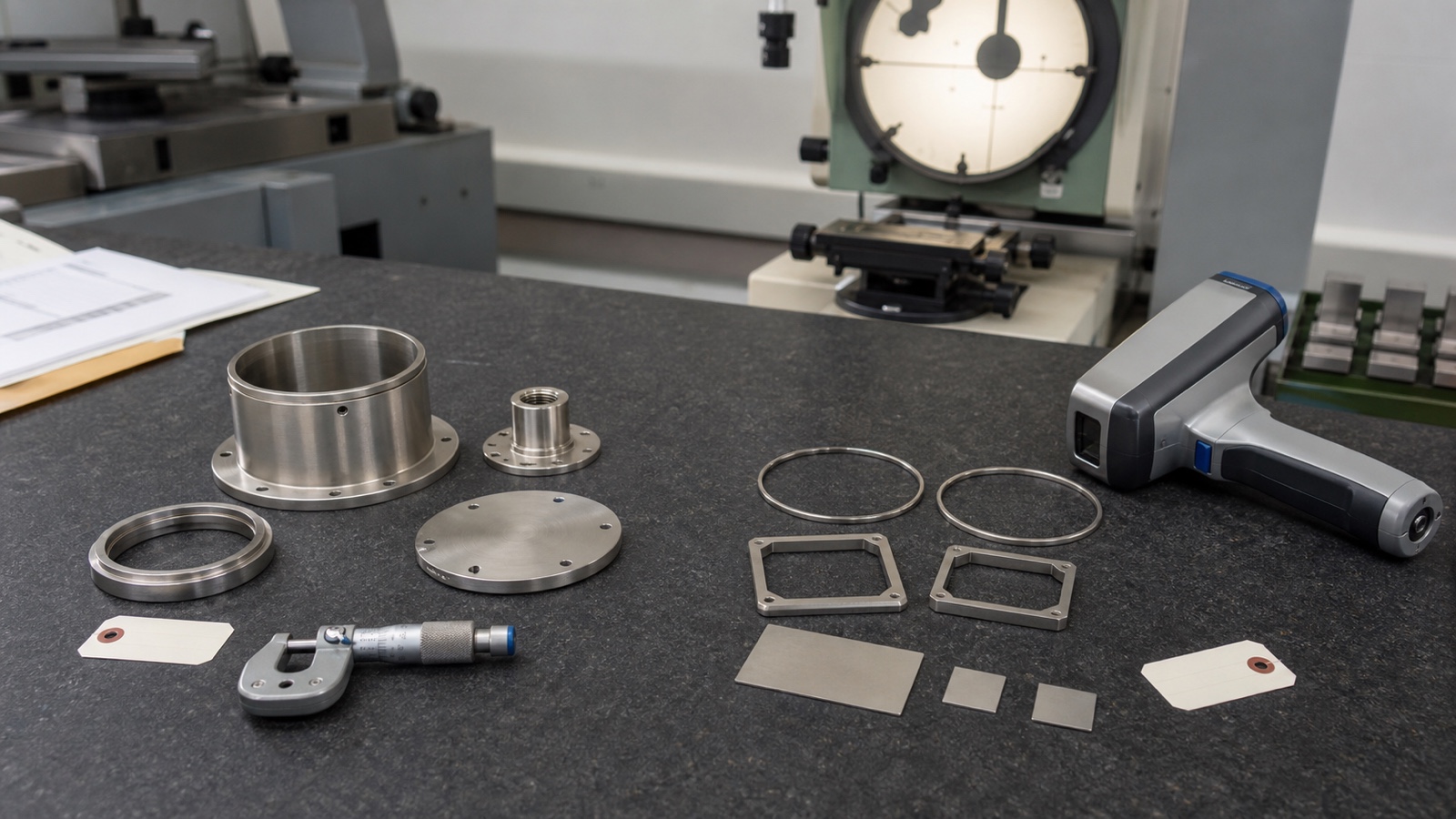
When we design hermetic electronic packages, optoelectronic modules, or precision instruments, one of the first material decisions we face is whether to use Kovar or a nickel-iron alloy like Alloy 42 or Invar 36. Both families share iron and nickel as base elements, but their thermal expansion behavior, cobalt content, and cost profiles lead to very different application sweet spots.
At KELTRYN, we machine Kovar and Fe-Ni-Co alloys every day for demanding hermetic sealing applications. In this article, I’ll walk through the key differences between Kovar and common nickel-iron alloys, explain why matching CTE is critical, and give you practical guidance on choosing the right material for your next project.
---
What Are Kovar and Nickel Iron Alloys?
Kovar is a registered trademark for a specific iron‑nickel‑cobalt alloy (typically 29% Ni, 17% Co, balance Fe). Its primary purpose is to match the thermal expansion of borosilicate glass (e.g., Corning 7740) and high‑alumina ceramics. This ability to form hermetic, stress‑free seals makes Kovar the gold standard in semiconductor packaging, lasers, and aerospace electronics.
Nickel‑iron alloys are a broader family of binary Fe‑Ni compositions—often with 36% to 52% nickel—that exhibit controlled thermal expansion characteristics. The most common grades include:
- Alloy 42 (42% Ni) – used for softer glasses and lower‑cost seals
- Invar 36 (36% Ni) – known for its extremely low CTE near room temperature (not for glass sealing)
- Alloy 52 (52% Ni) – an intermediate CTE option for certain ceramics
While Kovar is technically a nickel‑iron‑cobalt alloy, the industry shorthand “nickel iron alloy” usually refers to the binary Fe‑Ni grades. That distinction matters because cobalt dramatically changes the expansion curve and oxidation behavior.
---
Quick Comparison Table
| Property | Kovar (ASTM F15) | Alloy 42 | Invar 36 |
|----------|------------------|----------|----------|
| Composition | 29% Ni, 17% Co, bal. Fe | 42% Ni, bal. Fe | 36% Ni, bal. Fe |
| CTE (30–450°C) | ~5.5 ppm/°C | ~4.0–5.2 ppm/°C | ~1.2 ppm/°C (<230°C) |
| Thermal Conductivity | ~17 W/m·K | ~11 W/m·K | ~10 W/m·K |
| Density | ~8.2 g/cm³ | ~8.1 g/cm³ | ~8.1 g/cm³ |
| Tensile Strength | 450–550 MPa | 420–500 MPa | 450–550 MPa |
| Primary Application | Glass‑to‑metal seals (borosilicate) | Electronic leads, lamp bases | Precision instruments, molds |
| Relative Cost | Higher (cobalt) | Moderate | Moderate |
The cobalt content in Kovar gives it a CTE curve that closely follows borosilicate glass over a wide temperature range—something binary nickel‑iron alloys cannot match.
---
Composition & Metallurgy
Kovar’s Unique Composition (29% Ni, 17% Co, balance Fe)
Kovar is defined by ASTM F15 (UNS K94610). The 17% cobalt is critical: it raises the alloy’s Curie temperature and flattens the expansion curve so that it tracks borosilicate glass from –60°C to +450°C. Without cobalt, the CTE would deviate significantly above ~200°C, leading to seal stress and eventual failure.
Common Nickel Iron Alloys (Alloy 42, Invar 36, Alloy 52)
- Alloy 42: Lower cost than Kovar, with CTE around 4.0–5.2 ppm/°C (depending on temperature range). It works well for soda‑lime glass and lower‑temperature ceramics, but cannot match borosilicate’s expansion.
- Invar 36: With 36% Ni, this alloy has the lowest CTE of any common metal near room temperature (~1.2 ppm/°C). It is not intended for glass sealing—it is used for precision structures like laser cavities, optical benches, and mold inserts where dimensional stability is paramount.
- Alloy 52: A middle ground with CTE ~10.5 ppm/°C (room temp to 300°C) suitable for some alumina ceramics.
How Cobalt Affects Properties
Cobalt in Kovar does three things:
- Raises Curie temperature – The magnetic transition point shifts from ~200°C (for Alloy 42) to ~435°C, ensuring the expansion coefficient remains stable up to sealing temperatures.
- Improves oxidation resistance – The oxide layer formed during glass‑sealing is more adherent and uniform, which is essential for hermeticity.
- Reduces stress relaxation – Kovar maintains its mechanical properties better at elevated temperatures compared to binary nickel‑iron alloys.
These benefits come at a cost—cobalt is expensive and subject to supply volatility.
---
Thermal Expansion – The Critical Factor
Coefficient of Thermal Expansion (CTE) Values
| Alloy | CTE (ppm/°C) | Temperature Range |
|-------|--------------|-------------------|
| Kovar | 5.5 | 30–450°C |
| Alloy 42 | 4.0–5.2 | 30–400°C |
| Invar 36 | 1.2 | –60 to 230°C |
| Alloy 52 | 10.5 | 30–300°C |
For glass‑to‑metal seals, the alloy’s CTE must be slightly less than the glass’s CTE so that when the assembly cools, the metal compresses the glass (creating a compressive seal). Kovar’s 5.5 ppm/°C is nearly identical to Corning 7740 borosilicate. Alloy 42, with its lower CTE, is better suited for aluminosilicate glasses that expand less.
Why Matching CTE Matters
A mismatch of just 1–2 ppm/°C across the sealing temperature range can generate enough stress to crack the glass or create leak paths. In hermetic packaging—whether for MEMS sensors, laser diodes, or RF connectors—a failed seal means a failed device. That’s why we always verify CTE data from mill certifications before machining Kovar for sealing applications.
What Is Kovar Equivalent To?
If you see “Kovar equivalent” on a drawing, the standard reference is ASTM F15 or UNS K94610. Common trade names include Rodar, Sealvar, and FerNiCo 1.3981. All refer to the same Fe‑29Ni‑17Co composition with tightly controlled expansion.
---
Mechanical & Physical Properties
Strength and Ductility
Kovar offers a good balance of strength (~450–550 MPa tensile) and ductility (25–35% elongation). It can be cold‑worked, drawn, and machined without cracking. Alloy 42 is slightly softer but easier to deep‑draw into thin sleeves or covers. Invar 36 has similar strength to Kovar but is less ductile.
When machining Kovar—especially thin‑walled housings or sealing rings—we control feed rates and use sharp tooling to avoid work hardening and burrs. That’s a specialty we’ve built at KELTRYN.
Thermal Conductivity and Electrical Resistivity
Kovar conducts heat at ~17 W/m·K, slightly higher than most nickel‑iron alloys (10–15 W/m·K). For power electronics where heat dissipation matters, this difference can be significant. However, Kovar also has higher electrical resistivity (~50 µΩ·cm) compared to copper‑based alloys, which is acceptable for signal‑level leads.
Density and Weight
All three alloys have densities around 8.1–8.2 g/cm³—very close. For aerospace or portable devices where gram counts matter, the material choice won’t be driven by density. More important is the ability to use thinner walls with Kovar’s higher strength.
---
Corrosion Resistance & Oxidation
Will Kovar Rust?
Yes, Kovar can rust. Although it contains 29% nickel, the iron base is still susceptible to corrosion in humid or salty environments. Over time, red rust can form if the surface is not protected. For hermetic packages that see harsh conditions (e.g., military electronics, oil‑well sensors), we recommend passivation, nickel plating, or gold plating. Alloy 42 behaves similarly, though its higher nickel content gives slightly better intrinsic corrosion resistance.
Oxidation Behavior at High Temperatures
During glass sealing, Kovar is heated in a controlled oxidizing atmosphere to form a thin, adherent oxide layer (primarily FeO·Cr₂O₃ spinel). This oxide bonds chemically with the molten glass, creating a vacuum‑tight seal. Nickel‑iron alloys without cobalt form a less stable oxide, making them more prone to oxide spallation or poor wetting. That’s a key reason Kovar remains the standard for high‑reliability hermetic seals.
---
Applications – Where Each Alloy Excels
Glass‑to‑Metal Seals (Hermetic Packaging)
- Kovar: The go‑to for borosilicate glass seals in semiconductor packages, optoelectronics, and medical implants. If you’re designing a hermetic feedthrough or window, start with Kovar.
- Alloy 42: Used for soda‑lime glass or low‑temperature sealing (e.g., incandescent lamp bases, low‑cost headers). Not suitable for high‑temperature processes.
Integrated Circuit (IC) Lead Frames and Lids
- Kovar: Matches ceramic packages (alumina, beryllia) for high‑reliability microelectronics. Many aerospace hybrid circuits use Kovar lids welded to Kovar housings.
- Alloy 52: Suitable for alumina packages where CTE is ~7–8 ppm/°C, but not for borosilicate.
Invar 36 Applications
- Precision instruments, molds for composite layup, laser resonators, and astronomical telescope supports. Invar’s ultra‑low expansion is a blessing for stability, but it cannot be used for glass sealing.
Common Nickel‑Iron Uses
- Alloy 42: Relay parts, magnetic shielding, bimetallic strips, and lead frames for consumer electronics.
- Invar 36: Shadow masks for displays (historically), liquefied natural gas containment, and cryogenic components.
---
Cost & Availability
Is Kovar Expensive?
Yes, Kovar costs more than standard nickel‑iron alloys. The cobalt content alone adds 30–50% to raw material costs compared to Alloy 42. Additionally, Kovar must be melted to tight composition limits and certified for CTE properties, which increases lead times and price.
That said, for high‑reliability hermetic applications, the cost is justified. Using a cheaper alloy that fails in the field costs far more than the material premium.
Supply Chain Considerations
Kovar supply is tightly controlled—many mills prioritize defense and aerospace customers. Lead times can stretch 12–16 weeks for custom sizes. Alloy 42 and Invar 36 are more widely stocked and often ship faster. At KELTRYN, we maintain an inventory of common Kovar bar and plate sizes to keep your prototype and low‑volume schedules on track.
---
Fabrication & Machining
Machinability
Kovar and nickel‑iron alloys are “gummy” but machinable with proper technique. Use sharp carbide or CBN tools, flood coolant, and moderate feeds to prevent work hardening. Thin‑wall parts (e.g., Kovar housing walls < 0.5 mm) require careful clamping and multiple light passes to avoid distortion.
Our team at KELTRYN machines Kovar regularly for lids, caps, flanges, and sealing rings. We’ve learned to control burrs at critical sealing surfaces—a step that can make or break a hermetic assembly.
Welding and Brazing
Kovar can be TIG or laser welded, but preheating is often needed to avoid cracking. Nickel‑iron alloys may require filler metals with matched CTE. For brazing to ceramics, Kovar is the preferred choice because its oxide layer wets well with copper‑silver braze alloys.
Heat Treatment
Kovar requires a prescribed annealing cycle to develop the correct CTE. Alloy 42 and Invar 36 have simpler heat treat requirements. Always follow the material datasheet.
---
How to Choose Between Kovar and a Nickel Iron Alloy
Here’s a simple decision framework:
- What glass or ceramic are you sealing?
- Borosilicate (e.g., Corning 7740) → Kovar
- Soda‑lime or aluminosilicate → Alloy 42
- Alumina (96–99%) → Kovar or Alloy 52
- What is the operating temperature range?
- Above 300°C → Kovar (stable CTE)
- Below 200°C → Alloy 42 may suffice
- Do you need hermeticity?
- Yes, and high reliability → Kovar
- Moderate sealing, cost‑sensitive → Alloy 42
- Low thermal expansion for structural parts?
- Use Invar 36, not for sealing
- Budget constraints?
- Alloy 42 is a lower‑cost alternative where performance permits.
When in doubt, request a CTE curve from your material supplier and compare it to your glass partner’s data. We often help customers do this comparison before committing to a material.
---
Frequently Asked Questions (FAQ)
Is Kovar a nickel alloy?
Yes, Kovar is a nickel‑iron‑cobalt alloy containing about 29% nickel, 17% cobalt, and the balance iron.
What is Kovar equivalent to?
Kovar is equivalent to ASTM F15, UNS K94610, and trade names such as Rodar, Sealvar, and FerNiCo 1.3981.
Will Kovar rust?
Yes, Kovar can rust in humid or corrosive environments. For long‑term reliability, apply a protective coating like nickel or gold plating.
Is Kovar expensive?
Kovar costs more than binary nickel‑iron alloys like Alloy 42 due to cobalt content and specialized processing. However, for hermetic sealing applications, the performance justifies the price.
Can I machine Kovar on a standard CNC mill?
Yes, with proper tooling, coolant, and feeds. Thin‑wall features require experience to avoid chatter and burrs.
---
Conclusion
Choosing between Kovar and a nickel‑iron alloy comes down to one critical factor: thermal expansion matching. If you need a hermetic glass‑to‑metal seal for borosilicate glass or high‑reliability ceramics, Kovar is the proven choice despite its higher cost. For lower‑temperature seals or cost‑sensitive applications, Alloy 42 is a practical alternative. And for structural stability without sealing requirements, Invar 36 excels.
At KELTRYN, we specialize in precision CNC machining of Kovar and Fe‑Ni‑Co alloys. Whether you need a prototype Kovar housing, a production run of Alloy 42 lids, or design‑for‑manufacturability feedback before you release a drawing, we’re ready to help.
Contact us today with your project requirements. Let’s turn your design into a reliable, production‑ready component.
RFQ Support
Send Your Kovar Machining RFQ
Share drawings, CAD files, material requirements, quantities, tolerances, finishing needs, inspection requirements, and your target timeline. Our team will review the details and respond by email.
Helpful RFQ details
- 2D drawings or 3D CAD files
- Material: Kovar / ASTM F15 / Fe-Ni-Co alloy
- Quantity, tolerance, finish, inspection needs
- Application and purchasing timeline
Direct email: info@kovarmachining.com